
 HOTLINE:+8613974960765 +8618507312158 HOTLINE:+8613974960765 +8618507312158


— Knowledge —
— PRODUCTS —
 Service Hotline +8613974960765
Email:susie@hnljpump.com
Mobile:+8618507312158
TEL:+8613974960765
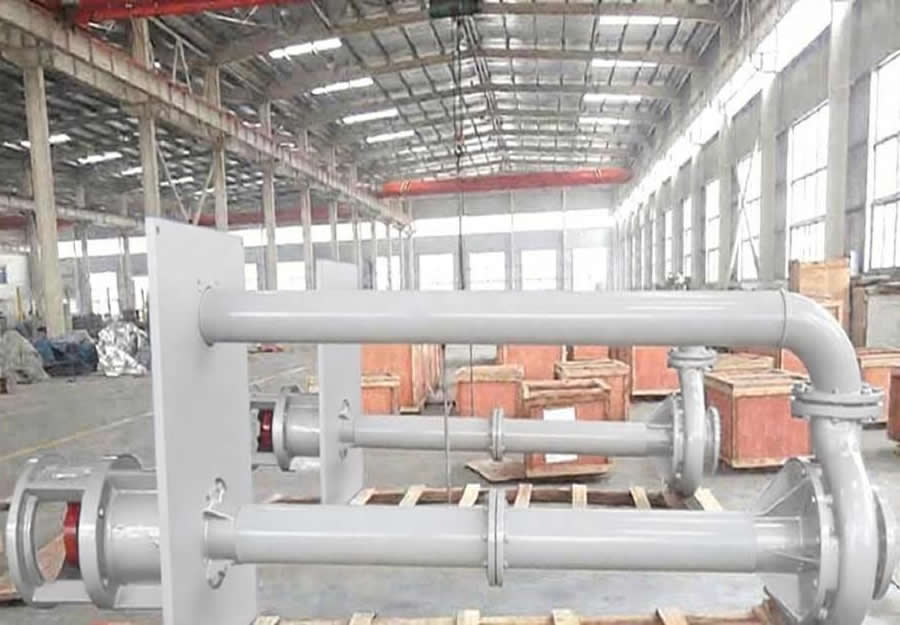
Vertical Sump Pump
Publication date:2025/3/30 0:01:00 popularity: [content:visits]
The selection of vertical long axis suspended semi submersible sump pumps in chemical desulfurization scenarios must focus on the core operating conditions of strong corrosion, high solid content, and long-term continuous operation, and be accurately matched from four dimensions: parameters, materials, structures, and supporting facilities. The specific selection rules are as follows:
Selection of core performance parameters
·Flow selection: Calculate the basic flow rate based on the amount of flue gas processed by the desulfurization system and the designed liquid to gas ratio, and reserve an additional 20% flow margin to avoid insufficient flow caused by increased slurry concentration and pipeline scaling, ensuring that the sulfur dioxide absorption efficiency meets the standard.
·Head selection: Based on the height of the absorption tower spray layer, the resistance along the pipeline, and the local resistance loss, a head margin of 10% to 15% is reserved to avoid insufficient spray pressure affecting the atomization effect. The margin should not be too large to prevent motor overload.
·Subsea depth selection: Customized according to the effective depth of the desulfurization slurry pool, the lowest position of the impeller is 300-500mm away from the bottom of the pool, and the length of the underwater insertion is 300mm lower than the lowest operating liquid level in the pool, ensuring full immersion without the need for pumping.
·Power selection: Based on the calculated shaft power, an additional 15% motor power margin is reserved to adapt to high load operating conditions with high concentration gypsum slurry, avoiding long-term overload and motor burnout.
Material selection of overcurrent components
·Conventional limestone gypsum desulfurization conditions: chloride ion content below 10000mg/L, high chromium wear-resistant alloy is selected for overcurrent components, with high hardness and erosion resistance, and a service life of up to 3-5 years, providing the best cost-effectiveness.
·High chloride ion corrosion condition: chloride ion content of 10000-50000mg/L, duplex stainless steel 2205/2507 is selected for overcurrent components, which combines corrosion resistance and wear resistance, and is suitable for high salt desulfurization slurry environment.
·Special desulfurization conditions with strong corrosion: If the chloride ion content exceeds 50000mg/L or contains strong acidic corrosive media, the overcurrent components should be lined with polytetrafluoroethylene/rubber material, which can fully withstand the erosion of strong corrosive media.
·Material of shaft sleeve and guide bearing: Wear resistant silicon carbide is selected for conventional working conditions, and filled polytetrafluoroethylene is selected for high corrosion working conditions to avoid excessive shaft vibration caused by slurry wear and corrosion.
Exclusive structural selection for working conditions
·Impeller selection: Semi open double balanced large channel impellers are preferred, which can smoothly pass through large solid particles in gypsum slurry, without blockage, with low operating vibration and an efficiency more than 10% higher than ordinary closed impellers.
·Selection of shaft seal structure: Select a desulfurization specific long shaft structure without mechanical seals, completely eliminate exposed mechanical seals, and ensure no leakage at the shaft seal, completely avoiding the contamination of the site by corrosive slurry leakage.
·Lubrication structure selection: The guide bearing adopts an external clean water external lubrication design, with a water supply pressure of ≥ 0.2MPa, to prevent gypsum particles from entering the bearing and causing rapid wear, greatly extending the service life of the bearing.
·Overall structure selection: Large slurry tanks use long axis structures with intermediate guide bearings, while small slurry tanks use short axis structures without intermediate guide bearings, suitable for different tank depth conditions.
⚙️ Selection of supporting systems
·Drive control selection: Asynchronous explosion-proof motors are selected for conventional working conditions, matched with variable frequency control systems, which can dynamically adjust the flow rate of the pump group according to the real-time load of the desulfurization system, reducing long-term operating energy consumption.
·Monitoring and protection selection: Equipped with vibration and temperature online monitoring sensors, real-time monitoring of pump operation status, triggering an alarm and shutdown immediately in case of abnormalities to avoid equipment damage.
·Installation and matching selection: The matching standard installation base plate is directly fixed on the top platform of the slurry pool, without the need for additional large pump rooms. The rotor components can be extracted as a whole for maintenance without dismantling external pipelines.
·Redundant configuration selection: The absorption tower slurry circulation pump is configured as "N for use and 1 for backup", and the accident slurry pool transfer pump is configured as "1 for use and 1 for backup". In the event of a single equipment failure, the backup pump is immediately put into operation to avoid unplanned shutdown of the desulfurization system.
This selection scheme for vertical long axis suspended semi submersible sump pumps fully covers the operational requirements of desulfurization scenarios, ensuring a continuous and fault free operation time of over 8000 hours for the vertical long axis suspended semi submersible sump pump equipment, significantly reducing the operation and maintenance costs and shutdown risks of the desulfurization system.
Related Recommendations

Service hotline
screenshots ,WeChat Scan the Qr Code
WeChat:ljpump6666